Word search puzzles are everywhere in senior living: on activity carts, in waiting rooms, in the stack of puzzle books by Grandma's chair. Are they actually good for older adults, or just a way to pass time? The honest answer is: they're genuinely good for some things, and not a magic fix for others.
What are word searches good for?
- Enjoyment and calm. A word search has no time pressure and no wrong answers along the way. For many people that is relaxing.
- Attention and visual scanning. Finding words in a grid means scanning rows, columns and diagonals and holding a word in mind while you look.
- A sense of accomplishment. Circling the last word is a small, real win, which matters on days when other things feel harder.
- Routine. A morning puzzle with coffee gives structure to the day.
- Conversation starters. Themed puzzles (1950s TV, hymns, gardening, baseball) bring up memories and stories, especially when done in pairs or groups.
Do word searches prevent dementia?
No puzzle has been proven to prevent or reverse dementia. Some studies have found that older adults who regularly do word and number puzzles score better on thinking tests, but that doesn't prove the puzzles caused it. People who stay sharp may simply enjoy puzzles more. Public health and Alzheimer's organizations generally recommend a mix of things: physical activity, social connection, managing blood pressure and other health conditions, good sleep, and staying mentally engaged with activities you enjoy.
Bottom line: do word searches because they're enjoyable and engaging, not because a package promises to "boost your brain."
How to choose a word search for an older adult
| What to look for | Why it matters |
|---|---|
| Large print (16-point or more) | Easier on aging eyes and in dim rooms |
| Smaller grids and fewer words for beginners | Keeps it fun instead of frustrating |
| Words forward, down and diagonal only (for easy puzzles) | Backward words are much harder |
| Familiar themes | Recognizable words are easier to spot and spark memories |
| An answer key | Nobody likes being stuck on the last word |
| Heavy paper or a clipboard | Easier to write on from a chair |
Word searches in memory care
For people with memory loss, use easy, large-print grids with short familiar words and fewer of them. Sit with the person, read the word list aloud, and help find the first word together. If a puzzle causes frustration, switch to coloring, sorting or conversation cards; the point is a good experience, not finishing.
Make it social
- Do a puzzle in pairs: one reads words, the other finds them.
- Put a big puzzle on a table for anyone passing by to add a word.
- Choose themes that start conversations: "Did you ever go to a drive-in?"
- Use a custom word search with family names, a hometown or a favorite team for a puzzle that's truly personal.
 Fabulous Fifties Word Search Printable: 4 Puzzles (Easy to Hard + Large Print)
 Golden Age of Radio Word Search Printable: 4 Puzzles (Easy to Hard + Large Print)
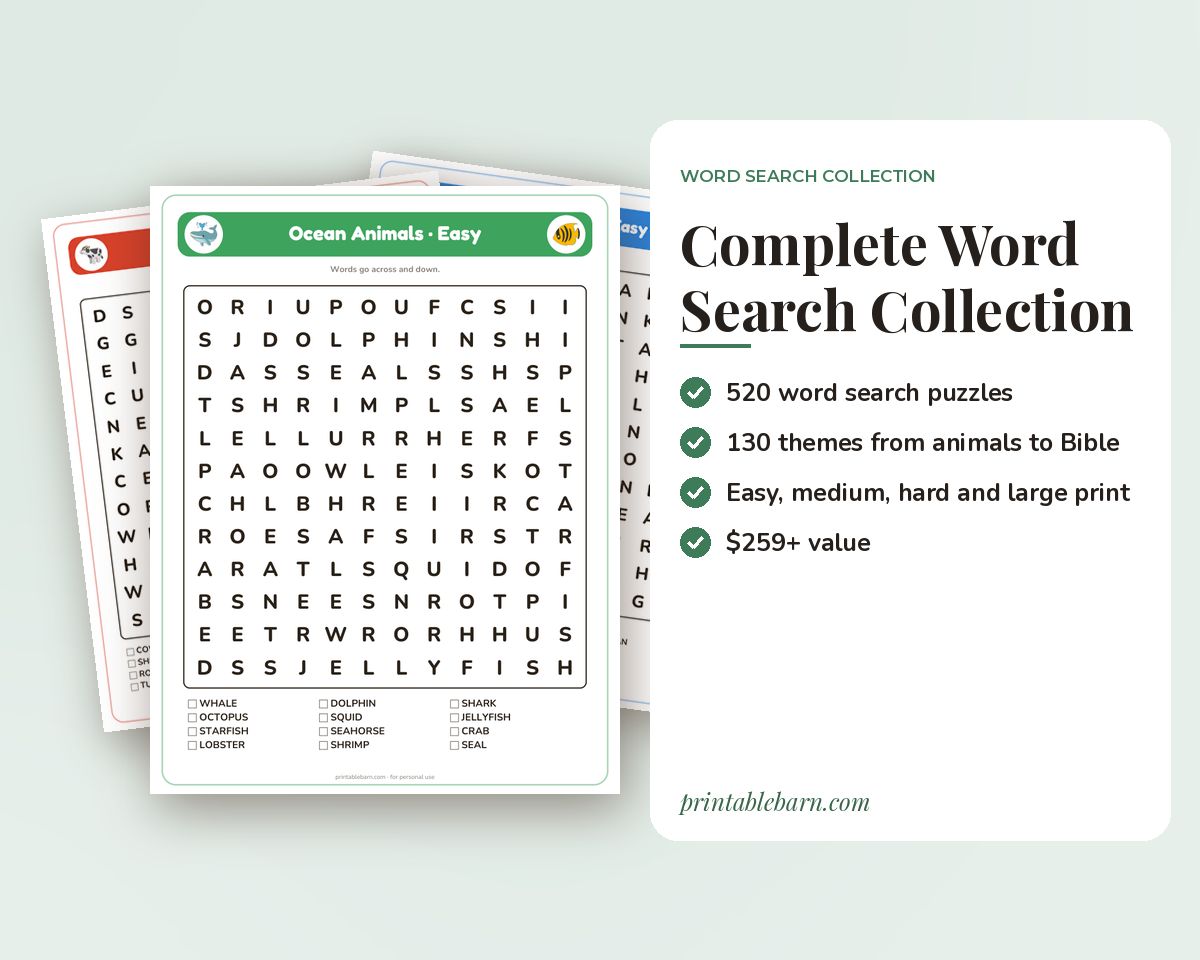 Complete Word Search Collection: 520 Printable Puzzles in 130 Themes (Large Print Included)
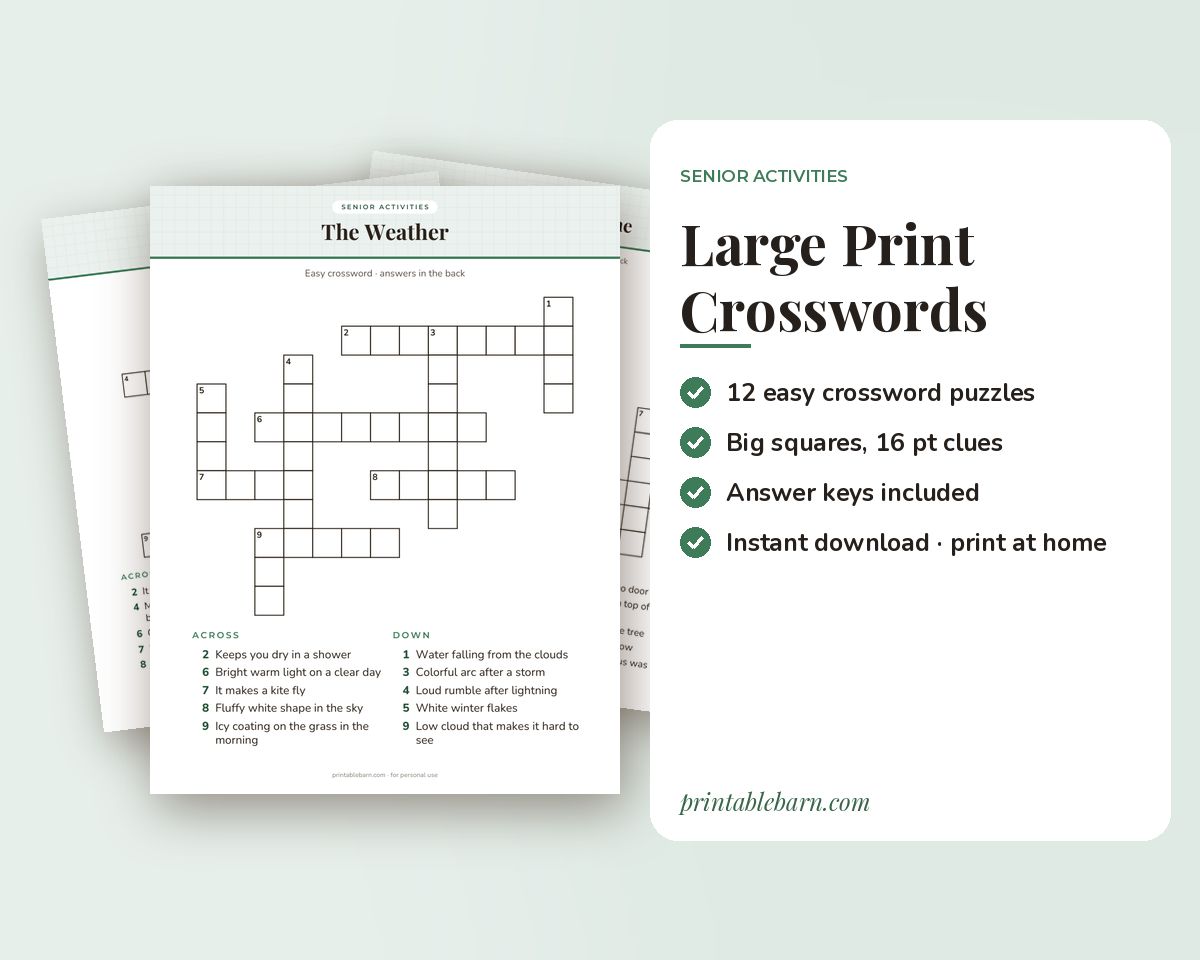 Large Print Crosswords for Seniors: 12 Easy Themed Puzzles with Answers
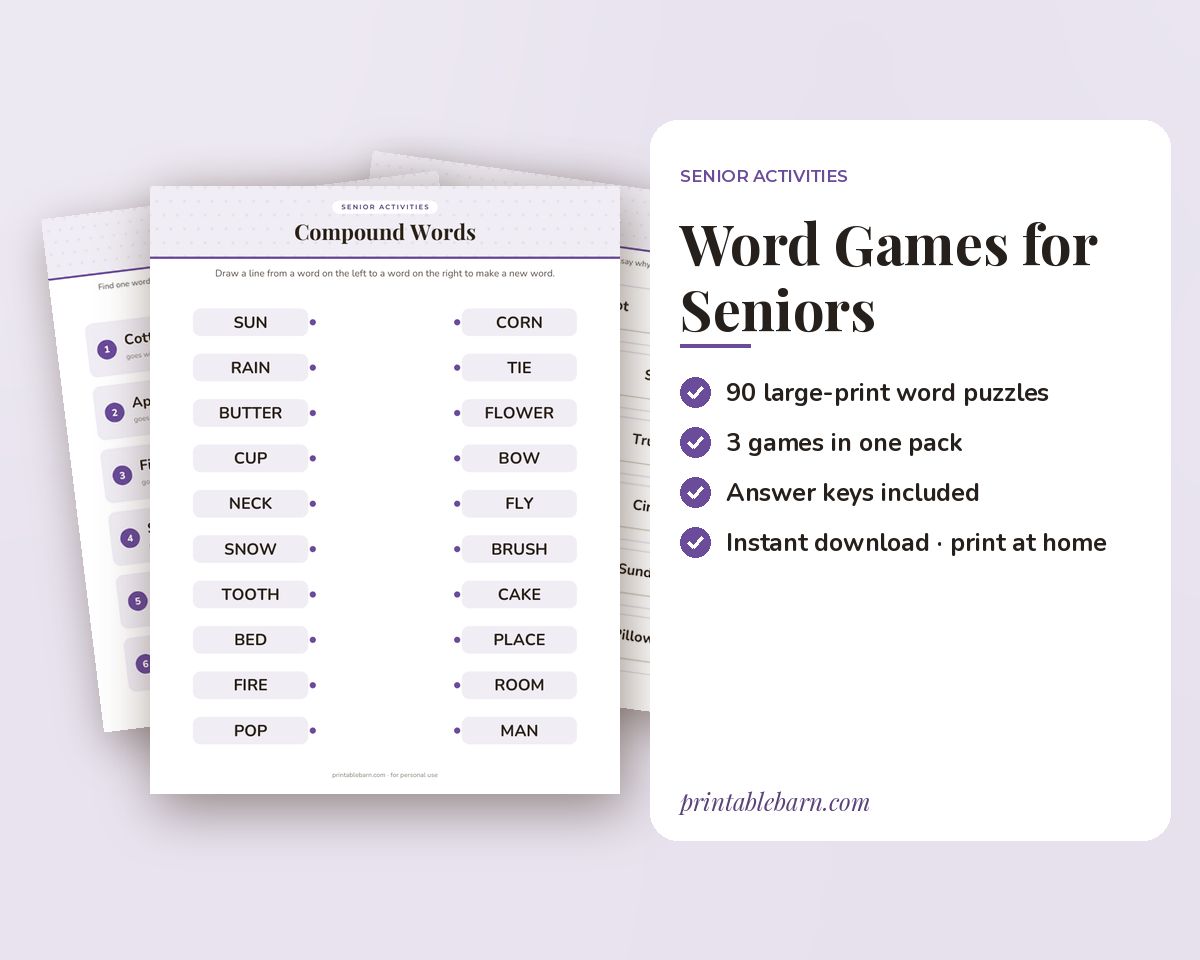 Word Games for Seniors: Word Links, Compound Words & Odd One Out (Large Print)