Quick answerFor someone with memory loss, choose a large-print calendar with plenty of space in each day, keep it in one visible spot they pass often, cross off each day every evening, and write only short entries ("Doctor 2:00, Sarah drives"). Pair it with a simple daily routine, and consider a digital day clock that shows the day and date.
⚖️ Please read: This article offers general tips for daily organization and is not medical advice. Changes in memory should be evaluated by a doctor; follow the person's care plan and ask their care team about strategies that fit their needs. Medication schedules should always be confirmed with a doctor or pharmacist.
Bigger is better: large numbers, high contrast, room to write.
One calendar, one place, so there's only one source of truth.
Cross off each day at the same time every evening.
Write short, specific entries, including who is coming.
Pair it with a day clock and a steady daily routine.
"What day is it?" is one of the most common questions families and caregivers hear. A well-chosen calendar, set up the right way, can answer it before it's asked and make the week feel more predictable.
What makes a good calendar for memory loss?
Large, bold numbers and day names that are readable from across the room.
High contrast: black on white, no busy photos behind the dates.
Room to write in each day box.
One month per page, hung flat, not a desk flip calendar that gets moved.
How to set it up
Pick one spot they see every day, like the kitchen or by their favorite chair.
Remove other calendars so there's no confusion about which one is right.
Cross off each day every evening, ideally together, as part of a routine.
Use short entries: "Church 10:00", "Haircut, Mom drives".
Add photos or symbols for visitors (a small photo of a grandchild on the day they visit).
Mark birthdays of family members ahead of time.
Helpful extras
Tool
Why it helps
Day clock
Shows the day of the week, morning/afternoon/evening and the date
Whiteboard "today" note
"Today is Tuesday. Lunch with Ann at 12."
Medication tracker
A simple check-off sheet kept by the pill organizer
Routine chart
Same order every morning and evening
Tips for family caregivers
Call and talk through the calendar together: "Tomorrow's Wednesday; the nurse comes at 10."
Keep entries consistent so the format becomes familiar.
As needs change, simplify: fewer entries, bigger print.
Disclaimer: This article offers general tips for daily organization and is not medical advice. Changes in memory should be evaluated by a doctor; follow the person's care plan and ask their care team about strategies that fit their needs. Medication schedules should always be confirmed with a doctor or pharmacist.
Printables that go with this
Every one has a free sample page, so you can print one and try it first.
What kind of calendar is best for someone with dementia?
A large-print, high-contrast monthly wall calendar with space to write, kept in one visible place. Many families add a digital day clock that shows the day and date.
How do you help someone with memory loss keep track of days?
Cross off each day on a single calendar at the same time every evening, keep a short daily note, and follow a consistent routine.
Is there a large print 2027 calendar I can print?
Yes. Printable Barn has a large-print 2027 calendar designed for easy reading.
Should I use more than one calendar?
Generally no. One calendar in one place avoids confusion about which one is correct.
About Printable Barn. We make low-cost, instant-download printables (large-print puzzles, bingo, party games, worksheets, planners and Sunday school pages) and free tools like an online bingo caller, a logo maker and a product label maker. Every puzzle is computer-checked, and every product has a free sample page. Questions: hello@printablebarn.com.


 Large Print Sudoku: 100 Puzzles
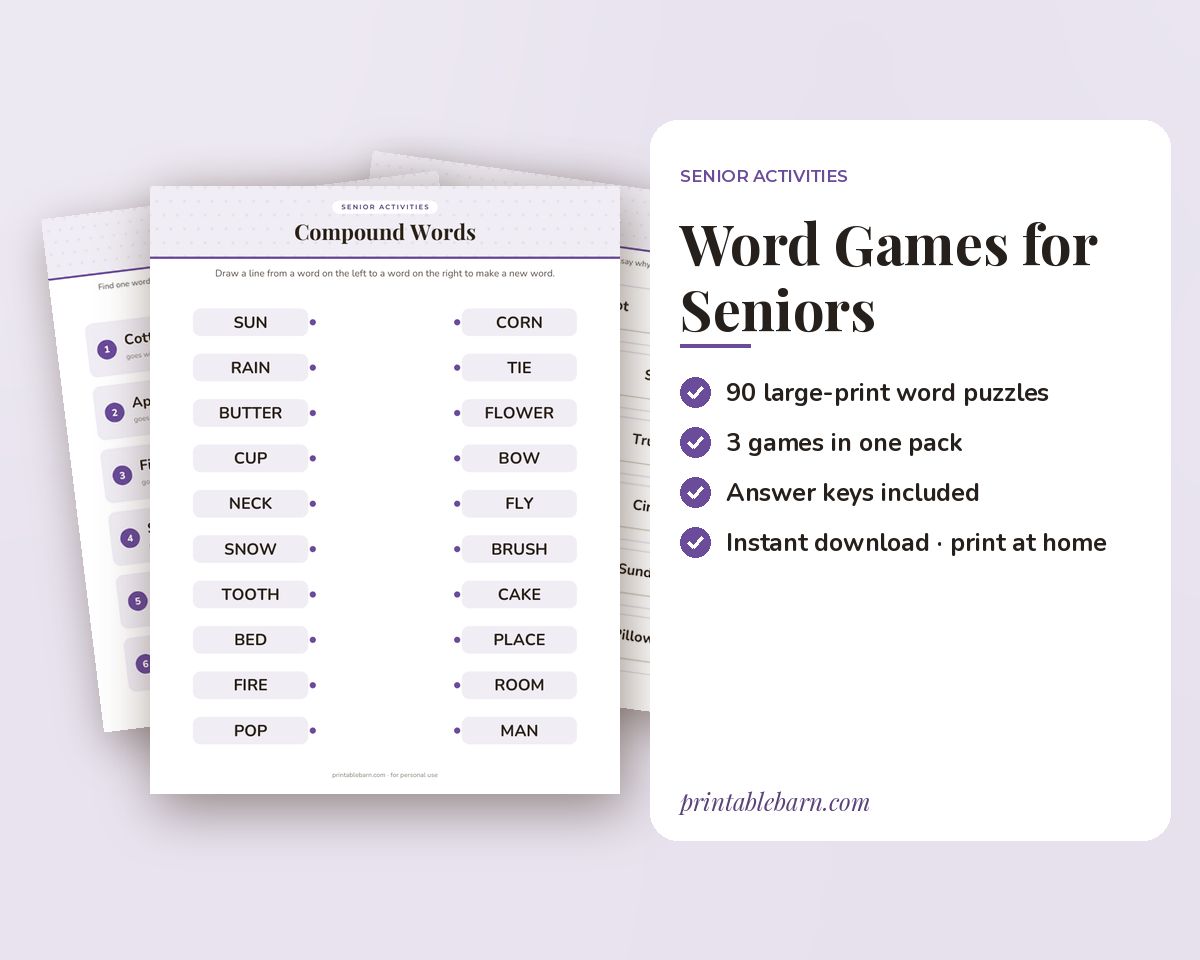 Word Games for Seniors: Word Links, Compound Words & Odd One Out (Large Print)