A new student arrives mid-year speaking only Spanish, and you found out this morning. The first week can feel like guesswork, but it does not need to. Your job in week one is not to teach grade-level content. It is to make the student safe, able to meet basic needs, and connected to at least one person in the room. Academic language comes after that foundation is in place.
Below is a practical plan for the first five days, the survival phrases to teach first, and what to print before the student walks in. If you want to try a few pages first, the free ESL pack is a no-cost place to start.
Before the student arrives: a 20-minute setup
If you have even a short warning, these steps make the first hour much calmer for everyone.
- Print survival phrase cards and passes. Put the phrase cards on a binder ring or lanyard so the student can point to what they need. A picture bathroom pass removes the most common first-day stress.
- Label the room in both languages. Door, restroom, library, pencil, backpack, teacher's desk. Bilingual classroom labels with pictures let the student find things without asking.
- Choose a buddy. Pick a patient, organized classmate. A bilingual buddy is a bonus, not a requirement. The buddy walks to lunch, specials and dismissal with the newcomer for the first week.
- Learn the student's name. Ask how to say it and practice it. Write it on the desk, cubby and a name tag.
- Check who to contact. Find out how your school reaches families in Spanish: an interpreter line, a bilingual staff member, or translated letters.
Survival phrases to teach first
Teach a small set well rather than a long list poorly. These phrases cover the needs a student must be able to communicate on the first day. Show the card, say the English phrase, have the student repeat it or point, and practice with gestures.
| English | Spanish | When it matters |
|---|---|---|
| I need the bathroom. | Necesito ir al baño. | Day one, first hour |
| I need water. | Necesito agua. | Day one |
| I need the nurse. | Necesito ir a la enfermería. | Day one |
| I need help. | Necesito ayuda. | Day one |
| I don't understand. | No entiendo. | Day one |
| Can you repeat that, please? | ¿Puede repetirlo, por favor? | Day two |
| Where is ___? | ¿Dónde está ___? | Day two |
| I feel sick. | Me siento mal. | Day two |
| I am hungry. | Tengo hambre. | Day three |
| Yes / No / Please / Thank you | Sí / No / Por favor / Gracias | All week |
The ESL Newcomer Survival Kit has 24 of these phrases as picture cards, the same phrases as a mini ring set and a one-page desk reference, plus four lanyard passes (bathroom, nurse, office, water) and fill-in hall slips.
A day-by-day plan for the first week
Day 1: Safety and belonging
- Greet the student by name and introduce the buddy.
- Walk the building together: restroom, nurse, office, cafeteria, bus or pickup area. Point and say each place in English.
- Hand over the phrase ring and bathroom pass, and practice using them once.
- Give a simple task the student can do successfully, like coloring and labeling a name tag or a picture page.
Day 2: Routines and school words
- Teach the words for the daily schedule: lunch, recess, line up, backpack, dismissal.
- Introduce school people: teacher, principal, nurse, counselor, librarian, custodian, bus driver.
- Post a picture schedule on the desk so the student can see what comes next.
Day 3: Picture vocabulary in short bursts
Spend five to ten minutes, two or three times a day, on picture vocabulary. Start with classroom objects and food, since those come up constantly. English–Spanish picture vocabulary cards work well for matching games with the buddy: one bilingual card, one English-only card, find the pair.
Day 4: First speaking with support
Invite short answers but do not require them. Offer a sentence frame such as "I like ___." or "This is a ___." Many newcomers listen for a while before they speak, and that listening is learning. Accept pointing, nodding and drawing as real answers.
Day 5: Join part of a lesson
Choose one lesson where the student can participate with visuals, such as math with manipulatives or a science activity with real objects. Give a simple version of the task and pair it with frames. Review the week's survival phrases and celebrate what the student can now do.
Contact the family in the first week
A welcome note in Spanish tells the family who you are, how to reach you and what the student needs to bring. Federal civil rights guidance from the U.S. Departments of Education and Justice says schools must communicate essential information to parents in a language they can understand, so use your district's interpreter or translation service for anything important, such as health, discipline or special services.
For everyday messages, bilingual parent letters and forms put English and Spanish on the same page: a welcome letter, a contact information form, a conference request, a field trip permission slip and positive notes home. The forms are fillable, so you can type in your name, room and contact details before you print.
What to avoid in week one
- Grade-level worksheets with no support. A page the student cannot read teaches only that school is confusing.
- Forcing the student to speak in front of the class. Let them practice with a buddy first.
- Testing right away for a grade. Follow your district's language screening process and give the student time to settle.
- Using the buddy as a full-time translator. A buddy helps with routines; the teaching is still yours.
- Banning Spanish. The home language helps the student think and connect new English words to ideas they already know.
Weeks two through four: building on the basics
Once the student can get through the day, move toward classroom language. Sentence frames give structure for academic talk: describing, comparing, sequencing, explaining and asking questions. ESL sentence frames by language function come at three levels with posters, ring cards and desk strips, so the newcomer can start with "It is ___." while classmates use longer frames.
Short daily speaking practice helps too. ESL speaking picture prompt cards give a picture, an easier question, a harder question and a frame on each card, so a partner pair can talk for three minutes without you running it.
A quick first-week checklist
- Phrase ring and bathroom pass printed and practiced
- Room labeled in English and Spanish
- Buddy assigned for lunch, specials and dismissal
- Building tour done
- Picture schedule on the desk
- Welcome letter sent home in Spanish
- Five to ten minutes of picture vocabulary each day
- One supported lesson joined by Friday
None of this requires a big budget. Start with the free ESL pack, print the survival phrases, and add the rest as you see what your newcomer needs.
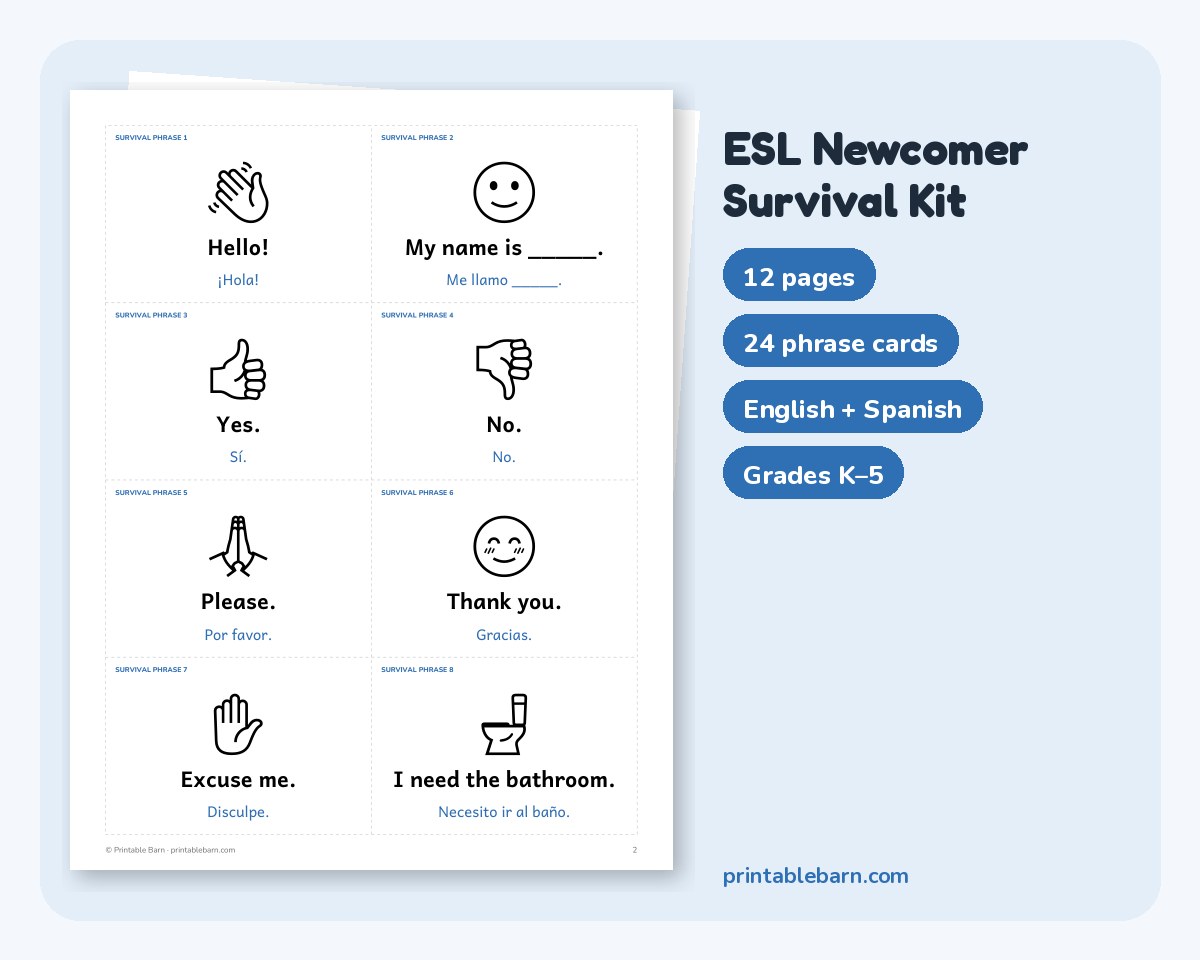 ESL Newcomer Survival Kit: English–Spanish Survival Phrase Cards, Bathroom Pass and First-Week Picture Words (Grades K–5)
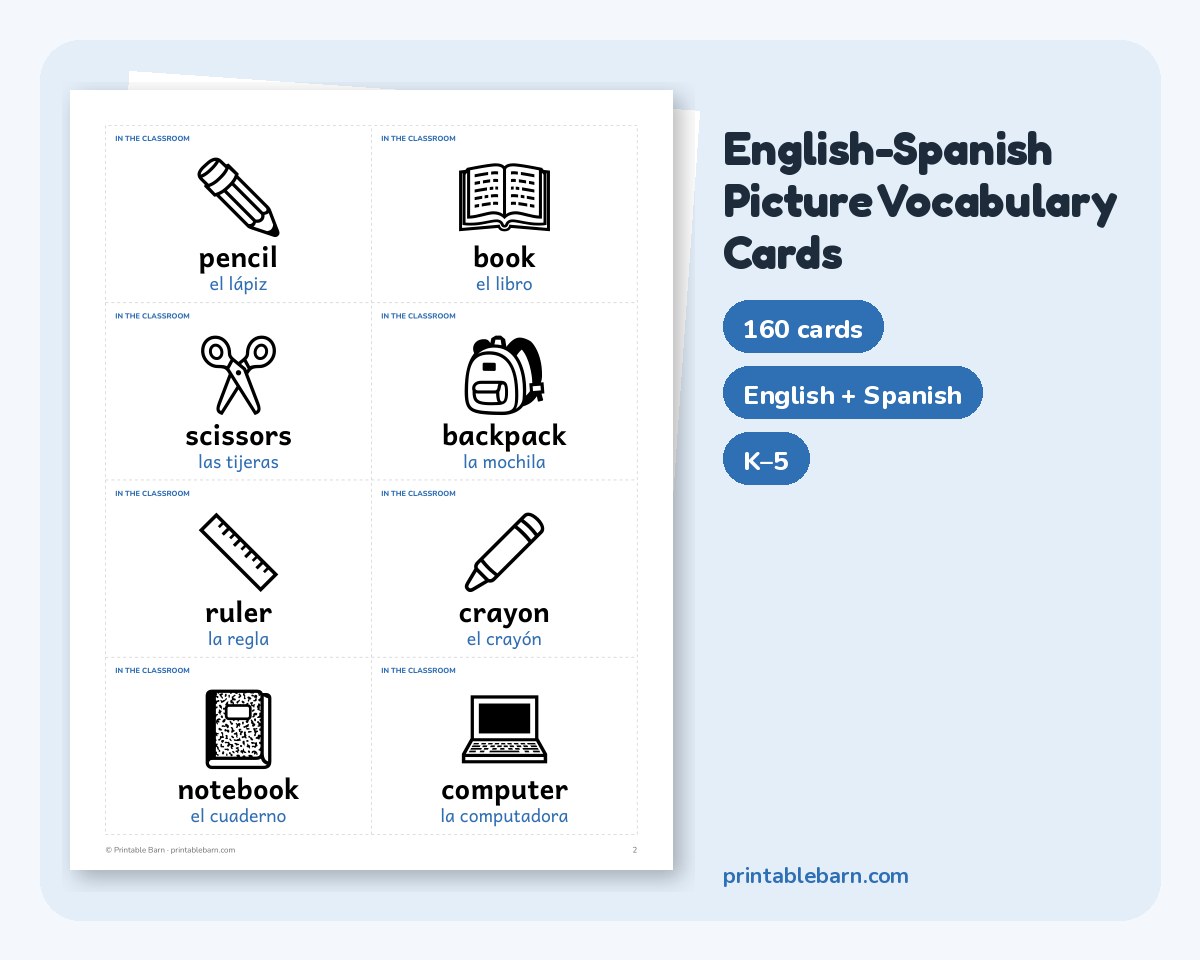 English-Spanish Picture Vocabulary Cards: 160 Bilingual Word Cards in 10 Themes (ESL / ELL, Grades K–5)
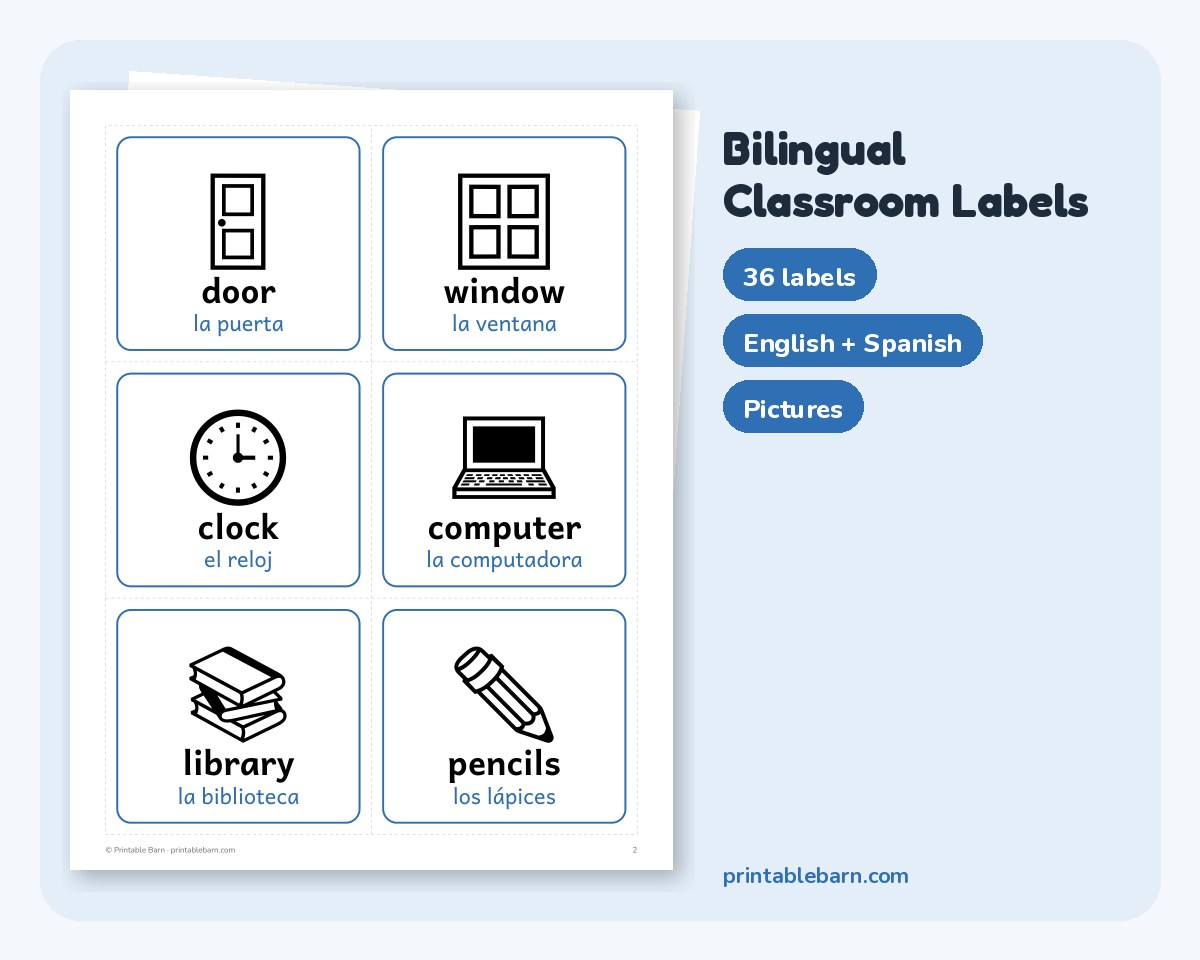 Bilingual Classroom Labels: 36 English and Spanish Labels with Pictures (ESL / Dual Language, Grades K–5)
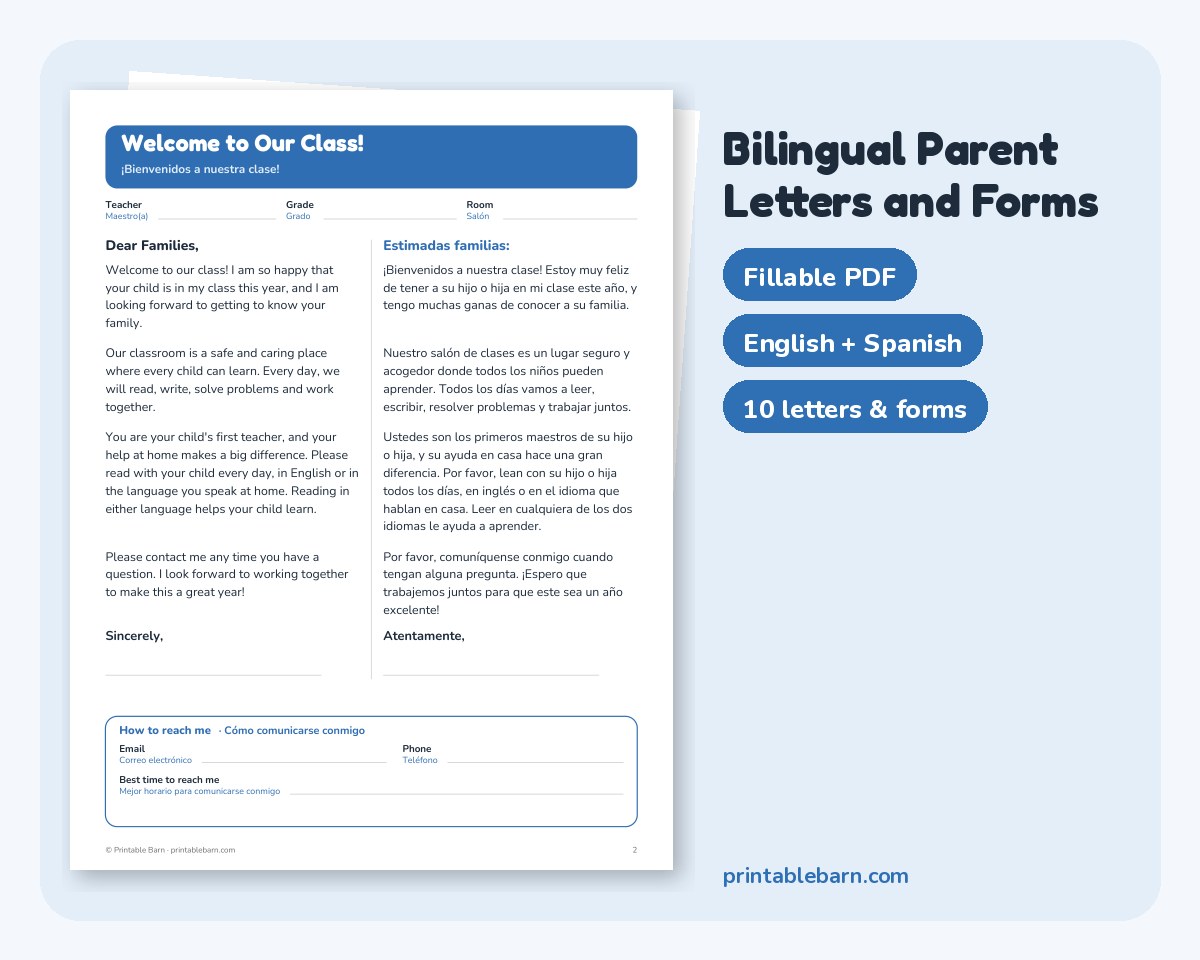 Bilingual Parent Letters and Forms: English–Spanish Templates for Teachers (Fillable PDF)
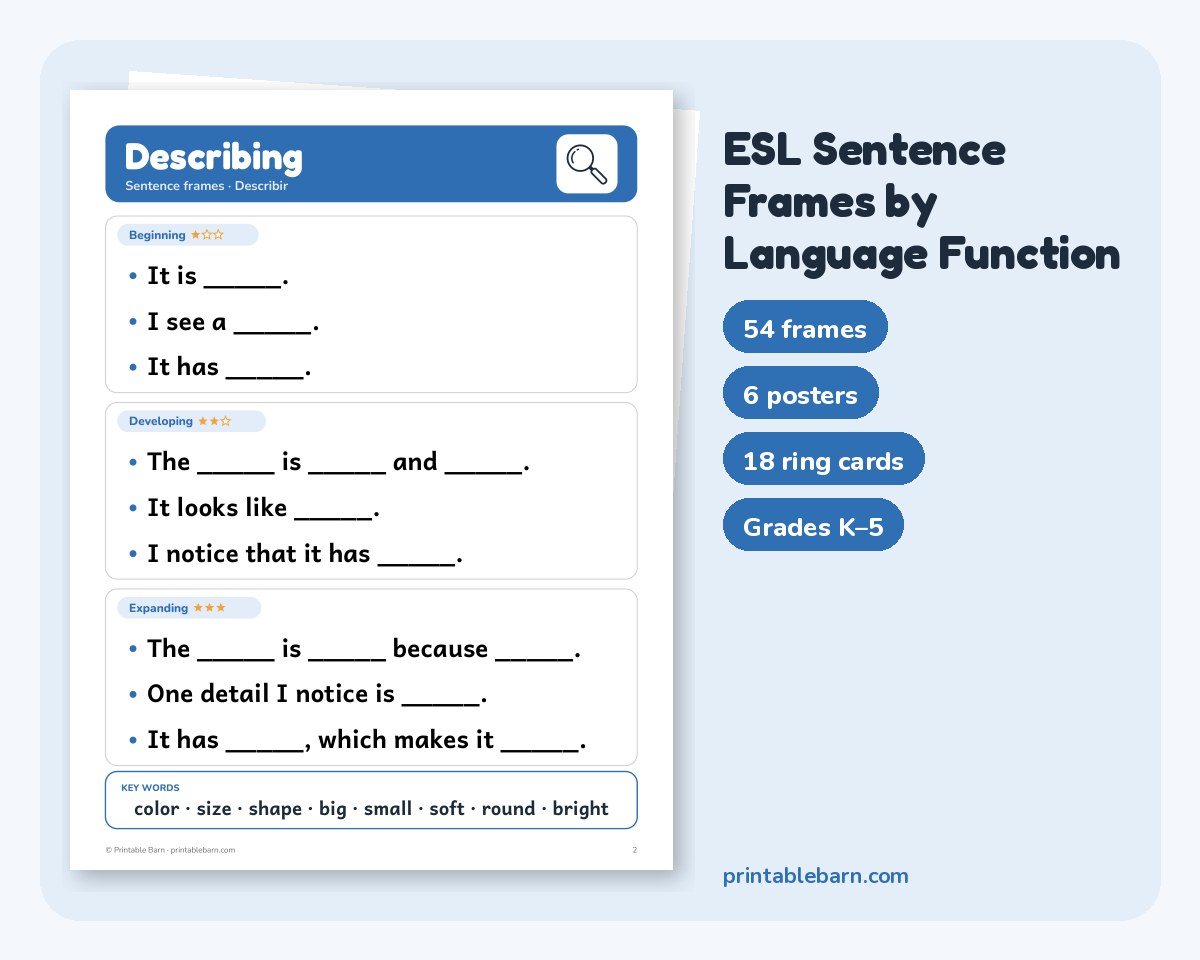 ESL Sentence Frames by Language Function: Posters and Student Cards for Describing, Comparing, Sequencing, Explaining and Asking (Grades K–5)
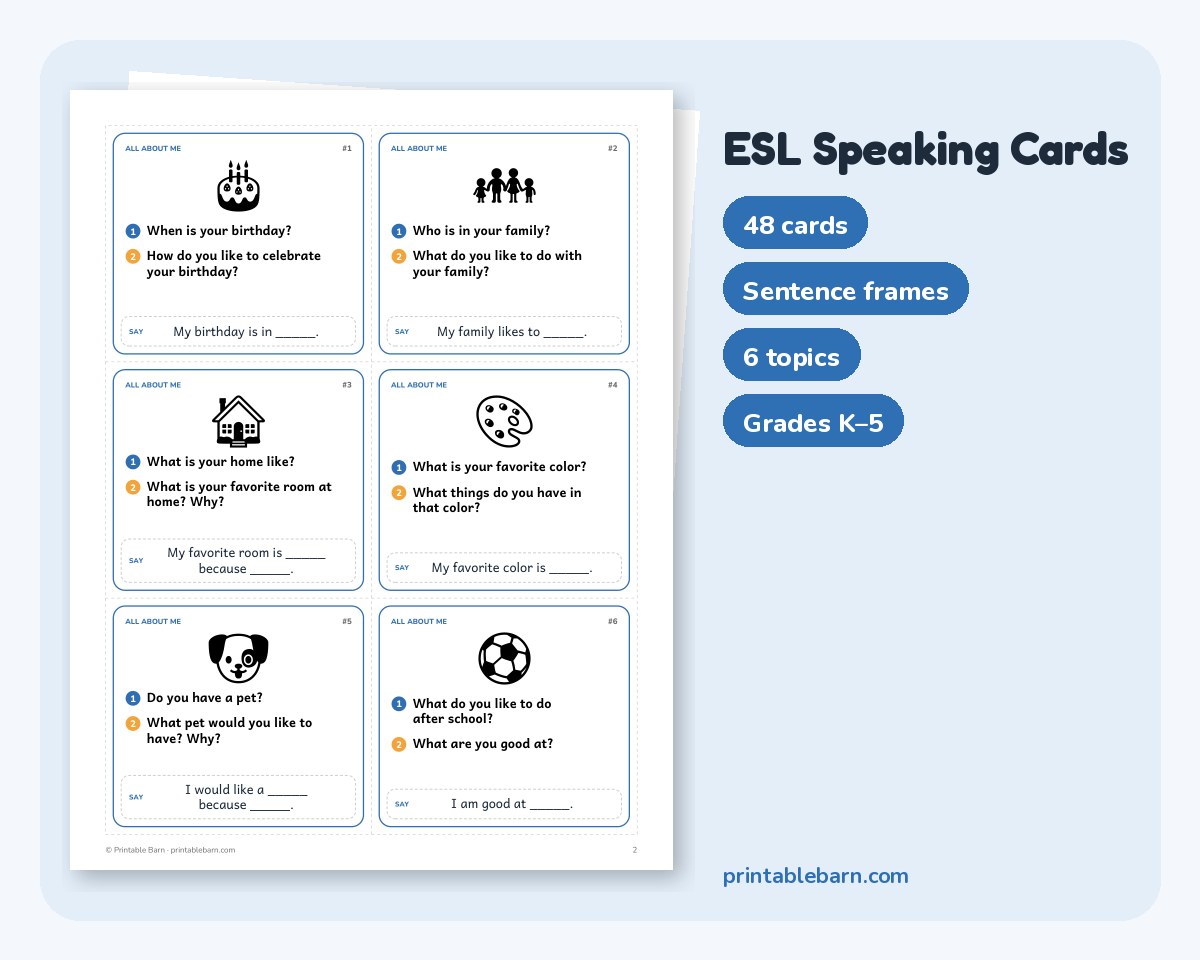 ESL Speaking Cards: 48 Picture Prompt Cards with Sentence Frames for Oral Language Practice (Grades K–5)