Meal planning saves money for one simple reason: you buy what you'll actually cook. Here's a system that takes about 20 minutes a week.
Step 1: Shop your kitchen first
Look in the fridge, freezer and pantry. Write down what needs using up this week (half a bag of spinach, chicken in the freezer, rice). Plan at least two meals around those.
Step 2: Check the sales
Look at your store's weekly ad or app. Plan the rest of your meals around the proteins and produce on sale.
Step 3: Pick meals that share ingredients
| Ingredient | Meal 1 | Meal 2 |
|---|---|---|
| Roast chicken | Chicken dinner | Chicken quesadillas or soup |
| Ground beef | Tacos | Spaghetti sauce |
| Bag of peppers | Stir fry | Fajitas or omelets |
| Big pot of rice | Rice bowls | Fried rice |
Step 4: Plan leftovers and a "use it up" night
Plan five dinners, not seven. Use one night for leftovers and one for using up odds and ends (soup, pasta, fried rice, breakfast for dinner).
Step 5: Write one grocery list by store section
Group items by produce, meat, dairy, pantry and frozen. You'll shop faster and skip aisles you don't need.
Cheap staples worth keeping on hand
- Rice, pasta, oats, dried or canned beans
- Eggs, frozen vegetables, canned tomatoes
- Potatoes, onions, carrots, cabbage
- A few spices you actually use
Make it a habit
Pick a planning day (many people use the day before they shop). Keep last month's plans: after a few weeks you'll have a rotation of family favorites you can reuse without thinking.
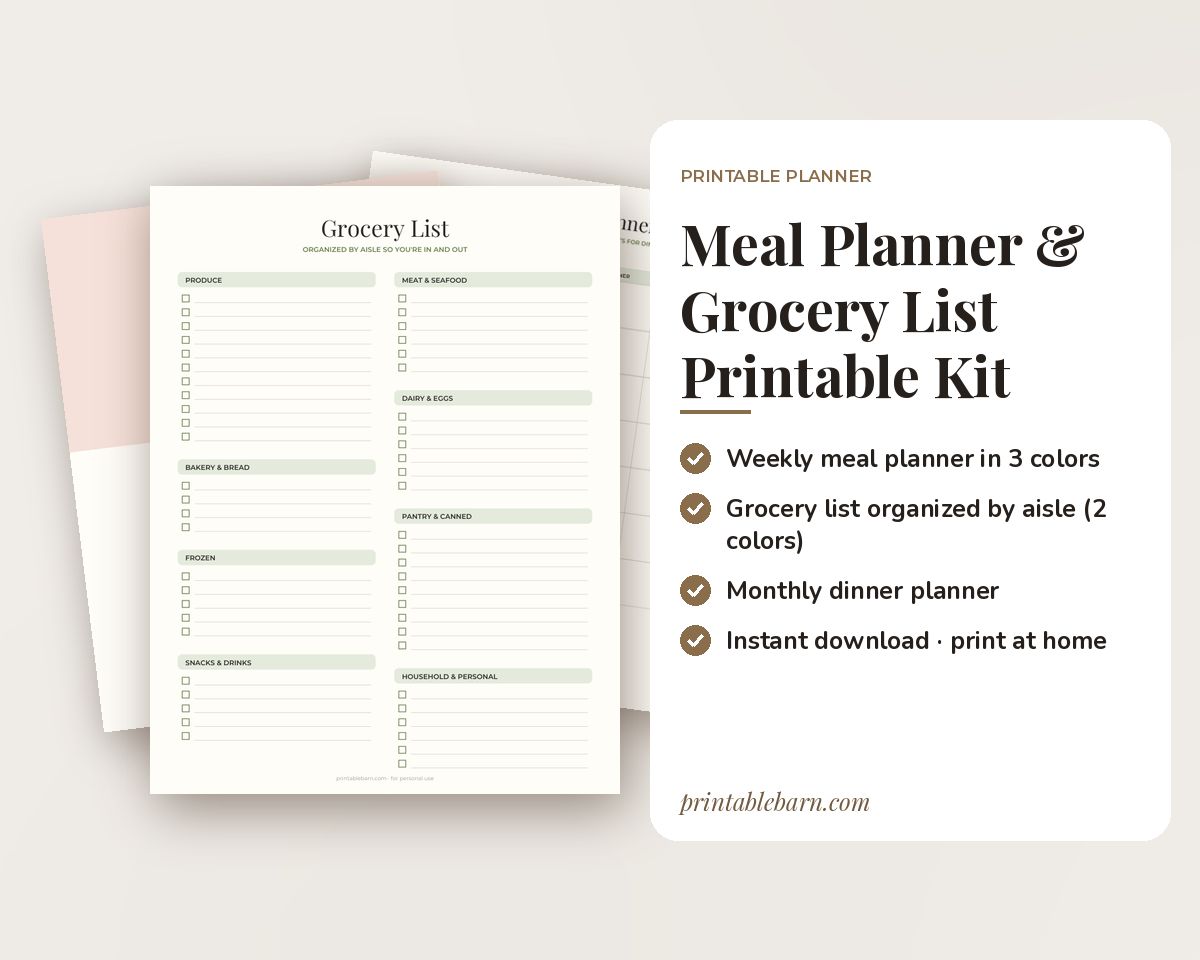 Meal Planner & Grocery List Printable Kit: Weekly Menu, Grocery List by Aisle, Pantry Inventory & 50 Dinner Ideas
 Weekly Meal Planner + Grocery List
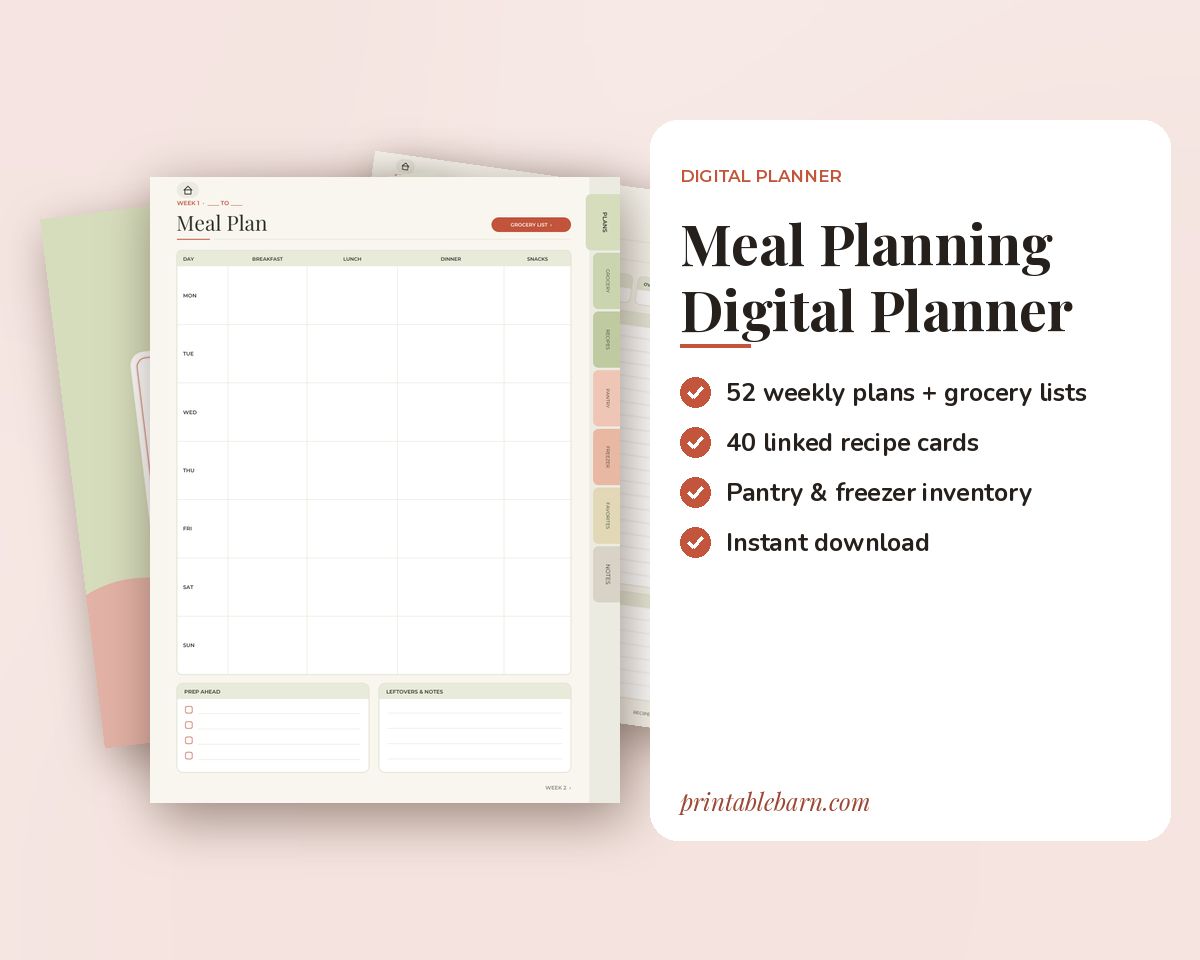 Meal Planner Digital: Hyperlinked Weekly Meal Plans, Grocery Lists & Recipe Cards for GoodNotes