Cursive is making a comeback. Several states have passed laws in recent years requiring it again, and many homeschool families teach it because it helps kids read historical documents and handwritten letters from grandparents. The good news: it's easy to teach at home in short daily lessons.
When should kids learn cursive?
Many children start around 2nd or 3rd grade, once their print handwriting is fairly steady. Some homeschool programs start earlier. Watch for readiness: a good pencil grip and the ability to copy shapes neatly.
Teach letters in stroke groups
| Group | Letters | Starts with |
|---|---|---|
| Magic c | c, a, d, g, o, q | A "c" curve |
| Swing-up letters | i, t, u, w, r, s, j, p | An upswing from the line |
| Loop letters | e, l, h, k, f, b | A tall loop |
| Hump letters | n, m, v, x, y, z | An overhill stroke |
Teach capitals after the lowercase letters, since they're used far less.
A 15-minute daily lesson
- Warm up (2 min): loops and waves in the air or on a whiteboard.
- Model (2 min): write the new letter slowly while describing the stroke.
- Trace (4 min): trace the letter on a worksheet.
- Write (4 min): write it on its own, then joined to a letter they know.
- Read (3 min): read a short cursive word or sentence.
From letters to words to sentences
Once a group is learned, write short words with those letters (cat, dog, add). After all lowercase letters are learned, move to copywork: a short sentence a day from a book, a poem or a Bible verse. Copywork builds speed and neatness while giving kids something meaningful to write.
Common problems and fixes
- Slanting all over: use slanted guide lines or tilt the paper.
- Letters floating: practice on lined paper with a clear midline.
- Tired hand: check grip and keep lessons short.
- b, o, v, w connections: practice these "high-exit" joins separately.
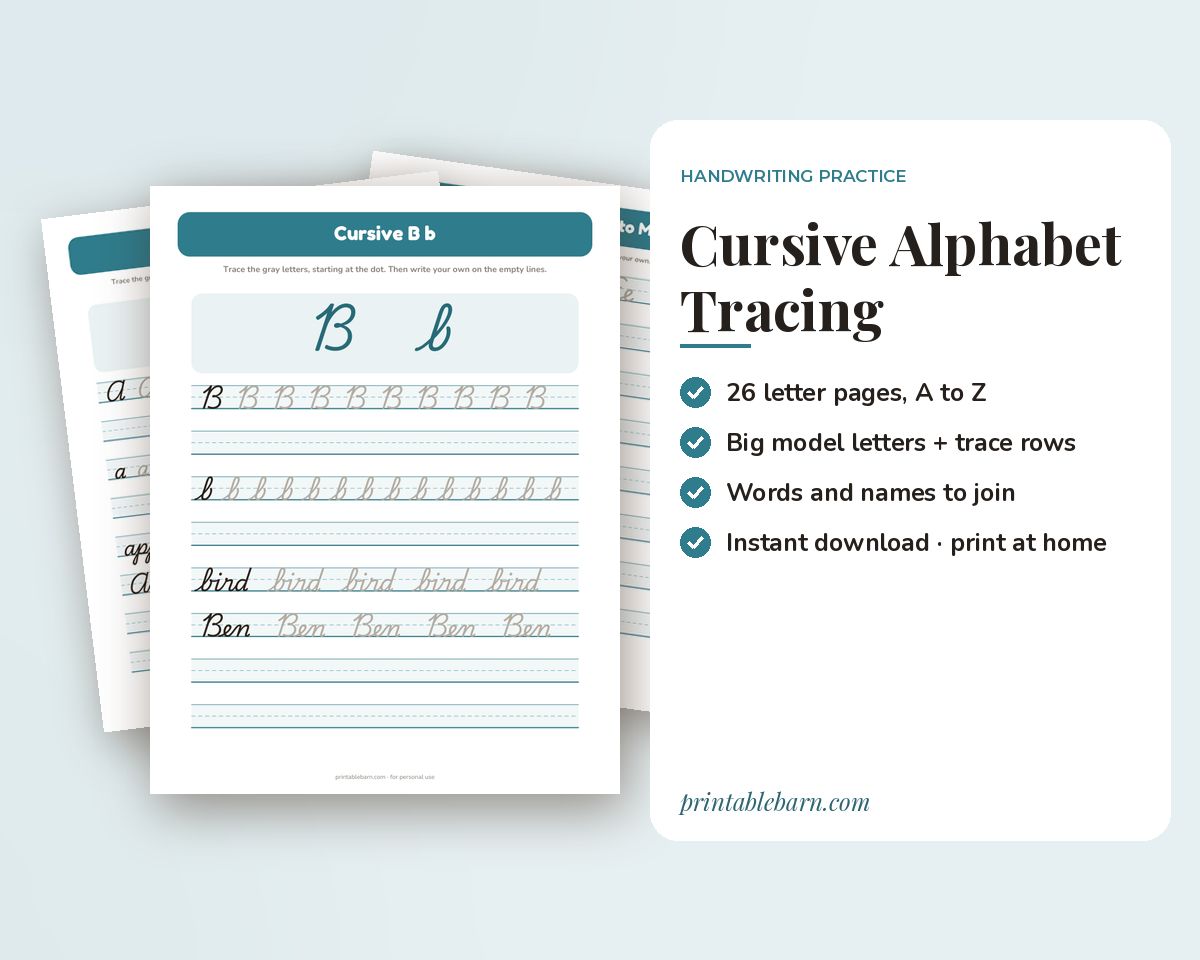 Cursive Alphabet Tracing Worksheets A–Z: Uppercase, Lowercase & First Words (Printable PDF)
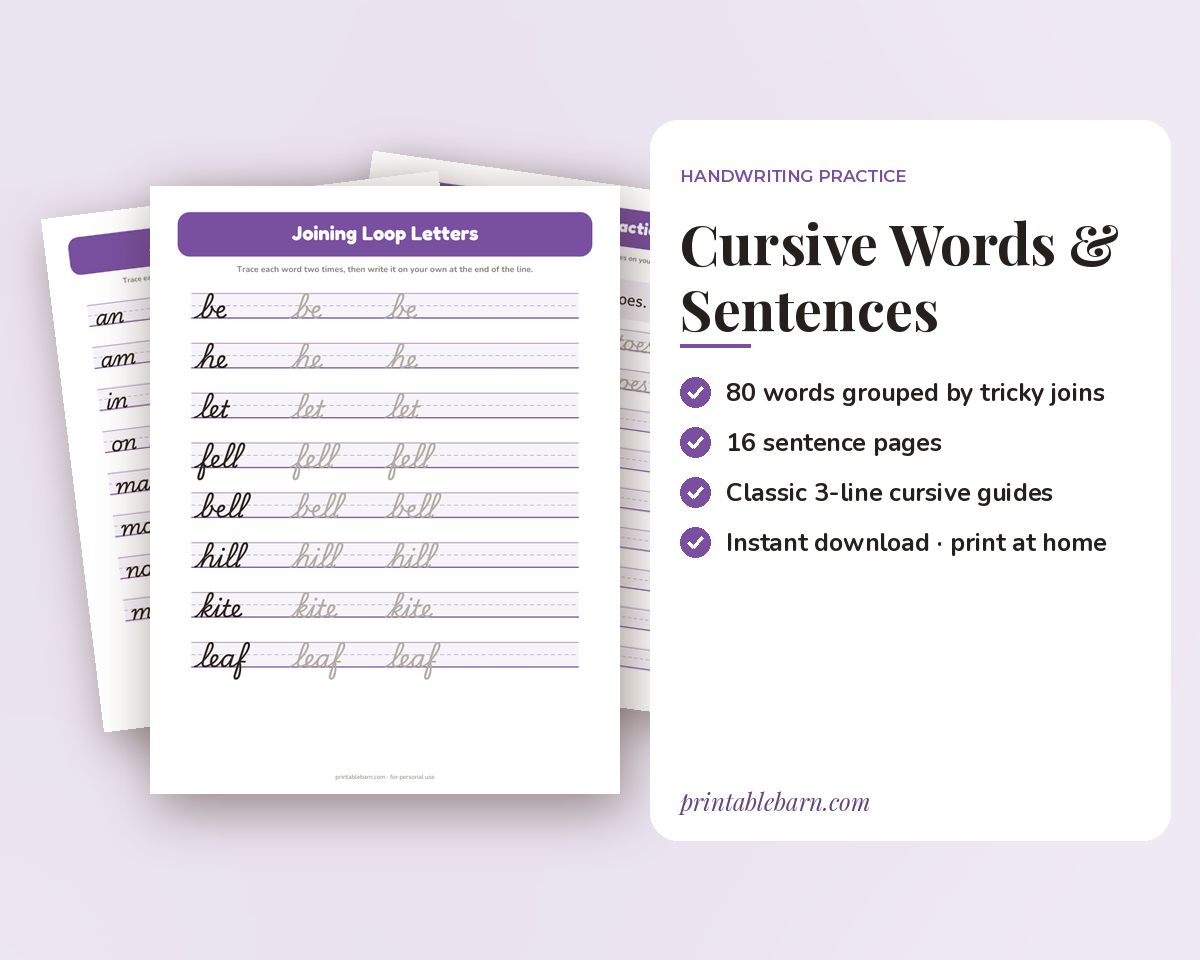 Cursive Words & Sentences Tracing Worksheets: 26 Pages of Joining Practice (Printable PDF)
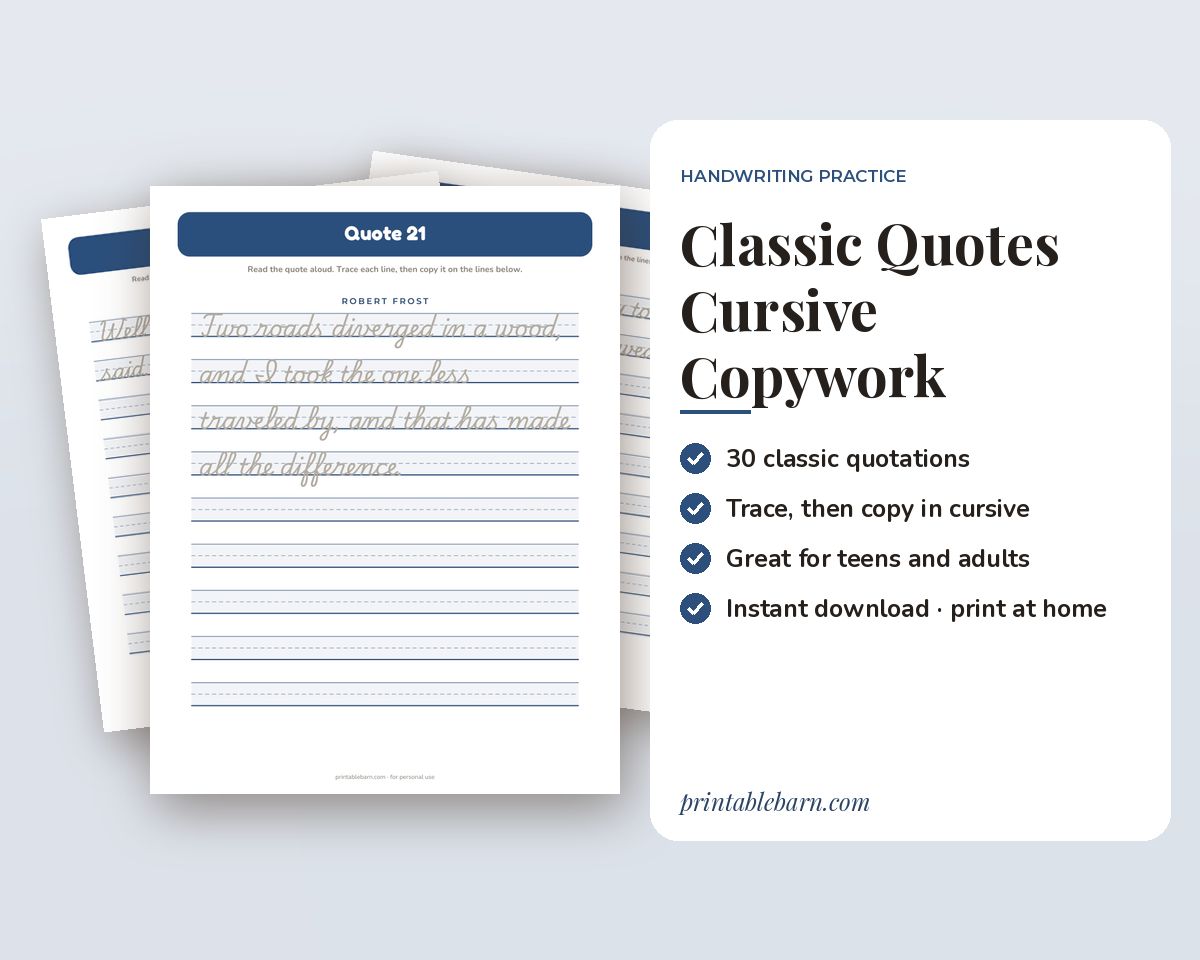 Classic Quotes Cursive Copywork: 30 Timeless Quotations to Trace & Copy (Printable PDF)
 Primary Handwriting Paper (Dashed Midline) Printable PDF